People Say - Family Game
- 4.7
- Rating
- 1.00M
- Installs
- Free
- Price

 Analysis by App-foxy
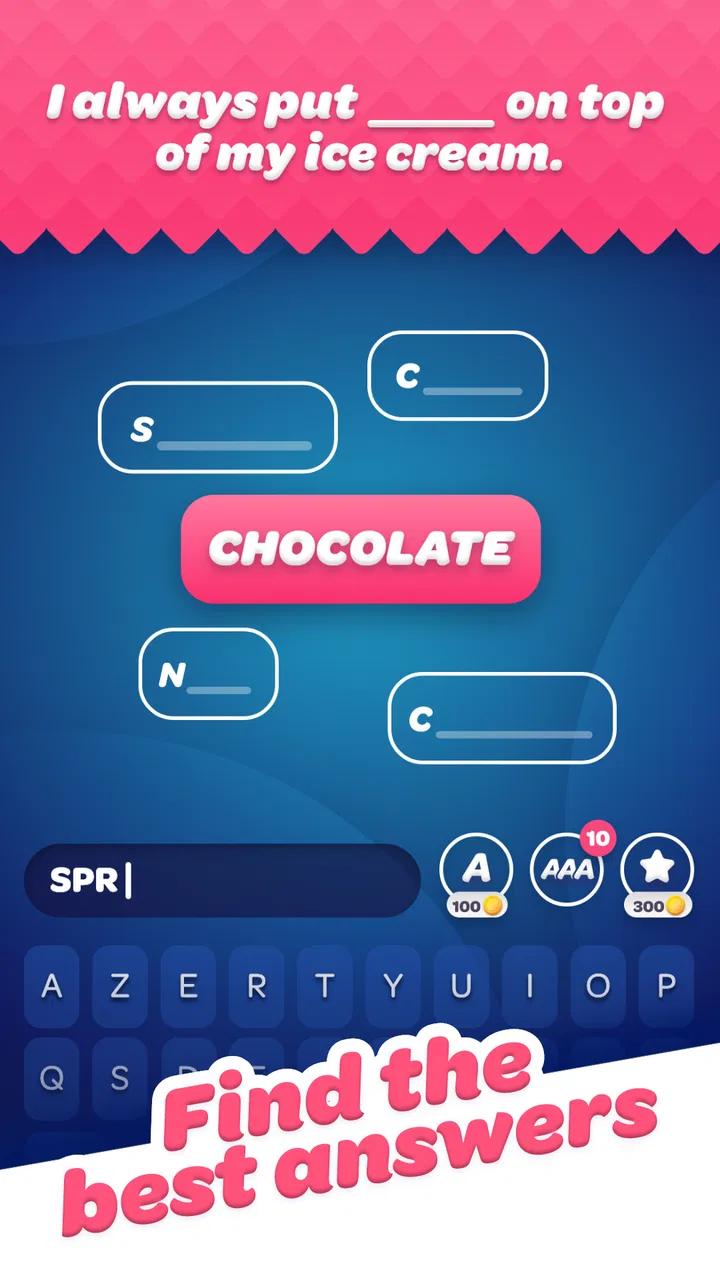
I found People Say - Family Game easy to understand within a few moments: read a prompt, think of the answers most people would give, and try to match the popular choices. That simple idea makes it a trivia game with a social feel rather than a test of obscure facts. I can play it alone for a quick distraction, but its strongest moments come when several people argue cheerfully over what “most people” would say.
The game is made by SAS ELIA and is free to start. It belongs to the trivia category, carries an Everyone age rating, and has reached more than a million installs. Those details fit its broad appeal: there is no specialist subject to learn before playing, and the central challenge is recognizing common opinions, habits, and associations.
How the game feels to use in different situations
I find this game’s most useful quality is how easily its prediction-based idea changes shape around the people playing. A quick solo round can fill a pause, while reading prompts aloud lets a family turn the same activity into a conversation without everyone needing to handle the phone. That flexibility matters most when choosing where to play, and it leads naturally to the trade-offs that come with sharing a small screen.
You May Also Like

 Blood Strike: 2.5 Anniversary
Blood Strike’s Loadouts Turn Every Drop Into a Tactical Gamble
A close look at Blood Strike’s custom loadouts: how fast access to signature weapons reshapes its battle royale rhythm, rewards preparation, and narrows the gap between fights.

 Pandora - Music & Podcasts
Pandora’s Music Is Easy to Start, but Harder to Recover
Pandora’s strength is its low-effort path from a seed to a station. Its weak spot is how much confidence it asks you to place in connection, setup, and quiet recovery.

 8 Ball Pool
 Is Built on Rivalries, Rematches, and Routine
A close look at the rivalries, rematches, shared routines, and unanswered safety questions that turn a quick pool match into a persistent mobile community.

 Samsung Music
’s Quiet Strength Is Playing What You Already Own
Its reach comes less from spectacle than from dependable access to a personal library. That simplicity is both the app’s strongest retention engine and its ceiling.

 AccuWeather: Weather Radar
AccuWeather Review: A Quick, Clear Forecast for Everyday Decisions
For everyday plans, the best forecast is the one you can understand quickly. AccuWeather makes rain timing, radar, and local conditions easy to act on, with a few trade-offs.

 Hill Climb Racing
Why Hill Climb Racing Still Turns Crashes Into One More Run
A tiny car, a bumpy hill and one more upgrade: Hill Climb Racing keeps resurfacing because its simple chaos makes every near-miss feel personal.
More From Our News Desk



Readable prompts and straightforward navigation
The main strength of the design is that the purpose of each round is immediately clear. I do not need to study a complicated rulebook or learn an elaborate control system. The question gives me a direction, and I can concentrate on predicting the answers that would be chosen most often. That makes the opening experience friendly for people who usually avoid trivia because they expect it to be packed with dates, names, or specialist knowledge.
The interface also benefits from the game’s narrow focus. There are fewer concepts to keep track of than in a conventional quiz with several categories, timers, lifelines, and score modifiers. For a family group, that matters because someone can join without first asking how every button works. A new player can watch one round and understand the basic rhythm.
Still, simplicity should not be confused with perfect clarity for every player. Word-based games depend heavily on being able to read the prompt and enter or select an answer comfortably. Someone with low vision may need a larger display or stronger system-level text settings, while a player with reading difficulties may need extra time to process the wording. I would not treat the game as automatically accessible simply because its rules are simple.
One useful habit is to read each prompt aloud when playing with a group. That turns the game into a more shared activity and helps anyone who finds small text, quick transitions, or dense wording tiring. It also reduces the advantage held by the person physically closest to the screen. In my experience, this makes the game feel less like one player operating a phone and more like everyone contributing to the same round.
Why common knowledge works better than traditional trivia
Traditional trivia often rewards memory: the player who remembers a capital city, a film release, or a sporting record has a clear advantage. Here, I am usually making a social prediction. I might know my personal favorite answer, but that is not necessarily the answer other people would choose. The interesting decision is whether to be original or safe.
That difference creates a more forgiving atmosphere for mixed-age groups. A child may not know the same facts as an adult, yet may still understand what answer sounds familiar or popular. Someone who does not enjoy competitive quizzes can participate through everyday experience rather than accumulated knowledge. The game is therefore a good fit for casual gatherings, waiting rooms, and short family sessions.
There is a trade-off, though. Players who want carefully sourced facts or a clear right-or-wrong answer may find the format less satisfying. The appeal depends on guessing the expected majority, not proving that an answer is objectively true. If your ideal trivia session involves deep questions and detailed explanations, a conventional quiz app will probably offer more substance.
Motor and sensory considerations
The basic play style appears well suited to people who prefer light interaction instead of complicated gestures. I am not dealing with a virtual joystick, rapid swipes, or a large set of simultaneous controls. That lowers the physical demand compared with action games and makes the title easier to approach for players who find fast games uncomfortable.
However, low motor complexity does not remove every physical barrier. Typing, tapping small answer controls, or repeatedly holding a phone can still be tiring for someone with limited dexterity, tremors, or hand pain. A stand can make a noticeable difference during a group session because the player does not have to grip the device throughout. Taking turns entering answers is another practical workaround when one person finds repeated tapping difficult.
Sensory comfort depends on the individual and the device. A phone screen may be manageable for one player and exhausting for another, especially in a bright room or during a long session. I would use the system’s available display adjustments where helpful and avoid assuming that a short round is comfortable for everyone. The game’s social nature makes it possible to share the reading and input duties, which is one of its most useful inclusive qualities.
For players who are sensitive to sound, the safest approach is to begin with the device volume low and adjust it personally. I would not make sound essential to a group’s participation; the prompt and answers should remain the focus. Playing in a quiet setting also helps people who struggle to separate speech from background conversation, although a busy family room can still become challenging once everyone starts debating possible answers.
A less obvious advantage is that the game can be played as a cooperative conversation even when one person does not operate the device. One player can hold the phone, another can read, and the rest can suggest answers. That arrangement is particularly useful for younger children, people with motor limitations, or anyone who prefers not to interact directly with a touchscreen. It changes the game from an individual phone task into a shared verbal activity without requiring a separate accessibility mode.
Using it at home, while travelling, or during a short break
The best everyday scenario I can imagine is a family waiting for food at a restaurant. One person opens the game, reads a prompt aloud, and everyone proposes what they think the popular responses will be. Nobody needs a prepared board, a stack of cards, or a long uninterrupted evening. If the conversation moves on, the session can stop without the sense that an entire match has been abandoned.
It also works for a quiet break when I want something more engaging than scrolling but less demanding than a full strategy game. The questions invite quick discussion, so I can play for a short period without committing to a complicated campaign. That makes it a practical choice for casual use, especially when the group includes people with very different gaming experience.
Travel introduces more variables. A small phone screen may be harder to share, and background noise can make spoken prompts difficult to follow. In a car, the game should remain with passengers rather than the driver; the conversational format is not a reason to distract someone who is operating a vehicle. On public transport, headphones may help with sound, but they can also isolate a player from the group discussion that gives the game much of its appeal.
The game’s Everyone rating makes it suitable for a broad household audience, but that does not mean every prompt will be equally interesting or understandable to every age. Adults and children may interpret “popular” differently because of their different experiences. I see that as part of the conversation, not necessarily a flaw, but an adult may need to explain unfamiliar wording or let a child answer without being judged against adult expectations.
Where the format can become frustrating
The central idea is also the main limitation: success depends on anticipating a broad consensus. If my answer is sensible but not among the expected popular choices, I can lose ground even when I understand the question. That can feel arbitrary to players who prefer personal creativity or factual precision. I have to accept that the game rewards audience awareness more than originality.
Repeated play may also expose the limits of a narrow concept. The first sessions benefit from surprise and debate, but players who spend a lot of time with it may begin to recognize familiar patterns in the prompts. I would treat it as a repeatable casual game rather than an endless source of fresh intellectual challenge. It is strongest when used in short sessions or shared with people who bring different perspectives.
The free entry point is welcome, but in-app purchases range from $0.99 to $99.99 per item. That is a significant spread, so I would be careful around optional spending, particularly when children are using the device. Before handing over the phone, I would check the account’s purchase protections and make sure everyone understands that the game is free to download but may offer paid items. This is an important practical consideration for a family title.
Another barrier is the difference between playing together and simply passing a phone around. A player with limited vision, hearing, reading fluency, or dexterity may participate fully in conversation yet still struggle with the device-specific part. The most inclusive setup is often a shared role: one person reads, one person enters the answer, and everyone discusses the likely response. That solution is effective, but it relies on considerate companions rather than a guaranteed in-game accommodation.
I would also skip this game if you want a solo trivia experience built around learning. It does not appeal to me in the same way as a knowledge app that explains why an answer is correct or lets me focus on one subject. People Say is better when the goal is laughter, prediction, and comparing viewpoints. Choosing it for serious study would be a mismatch.
Version, value, and who should try it
The current version is 3.0.0, and the game has an average rating of 4.7 from around 33 thousand ratings, with roughly 1.3 thousand written reviews. I take that strong reception as a sign that the central format connects with many casual players, while still judging it on the situations where I would actually use it: short sessions, family play, and low-pressure conversation.
Because it is free, trying it costs nothing upfront. That makes it easier to test with a household before deciding whether the optional purchases are worthwhile. I would not spend immediately. First, I would see whether the prompts remain enjoyable for the intended group, whether the text is comfortable on the available screen, and whether everyone can take part without one person dominating the device.
The game is especially good for families, friends who enjoy guessing what others think, and players who prefer social trivia over memorizing facts. It can also help a group start talking when nobody wants to organize a formal board game. People who need large text, spoken guidance, or fully hands-free interaction should approach it with a shared-play plan rather than assuming the phone interface will meet every need.
Its minimum operating-system requirement is Android 7.0, which keeps it relevant to a range of older Android devices. I would still check the experience on the particular phone or tablet before planning a large event, because screen size, brightness, and input comfort matter more here than raw game complexity. A tablet can improve shared readability, while a phone is more convenient for a quick individual round.
My inclusive verdict
I like People Say because it makes trivia less intimidating. The game does not ask me to be the most knowledgeable person in the room; it asks me to understand how other people might answer. That shift gives children, casual players, and adults with different interests a reasonable way into the same activity.
Its accessibility is practical rather than comprehensive. The uncomplicated rules, light controls, and conversational format can support many players, especially when the group reads prompts aloud and shares the input task. At the same time, touchscreen text, physical tapping, sensory conditions, and the need to interpret popular answers can still exclude people if the session is not adapted thoughtfully.
My recommendation is to use it as a flexible group conversation game, not as a complete accessibility solution or a deep fact-based quiz. If your priority is an easy family activity that can start and stop quickly, the free version is worth trying. If you need extensive individual settings, rigorous educational content, or a game that rewards unusual answers, another trivia option will serve you better. For the right group, though, its simple question-and-prediction loop creates exactly the kind of low-pressure competition that gets people talking.
FAQs for People Say - Family Game
01What is the main objective of People Say - Family Game?
People Say - Family Game is designed to be a fun and engaging way for families and friends to connect. The main objective is to guess the most popular answers to various survey questions. This encourages players to think creatively and bond over shared experiences and knowledge, making it perfect for gatherings.
02Is People Say - Family Game suitable for all ages?
Yes, People Say - Family Game is suitable for players of all ages. The questions are designed to be family-friendly, and the game mechanics are simple enough for children while still providing a fun challenge for adults. It’s a great way to include everyone in family game night.
03Does People Say - Family Game require an internet connection to play?
People Say - Family Game can be played offline, making it convenient for travel or places without internet access. However, an internet connection may be needed for initial setup, updates, or downloading additional content. Check the game’s settings for more details on offline capabilities.
04How many players can participate in a single game session?
People Say - Family Game is flexible and can accommodate a varying number of players. Typically, it supports 2 to 8 players, making it ideal for both small gatherings and larger family events. Players can either play individually or team up for a more collaborative experience.
05Are there any in-app purchases in People Say - Family Game?
Yes, People Say - Family Game offers in-app purchases. While the core game is free, players can buy additional question packs or features to enhance their experience. It's important to manage these settings, especially if children have access to the game, to avoid unintended purchases.
Pros
- Engaging family-friendly gameplay.
- Simple controls easy for all ages.
- Regular updates with new content.
- Encourages teamwork and communication.
- Fun graphics and lively animations.
Cons
- Limited offline play options.
- In-app purchases can be pricey.
- Occasional ads interrupt gameplay.
- Requires steady internet connection.
- Some levels can feel repetitive.

People Say - Family Game
Gallery